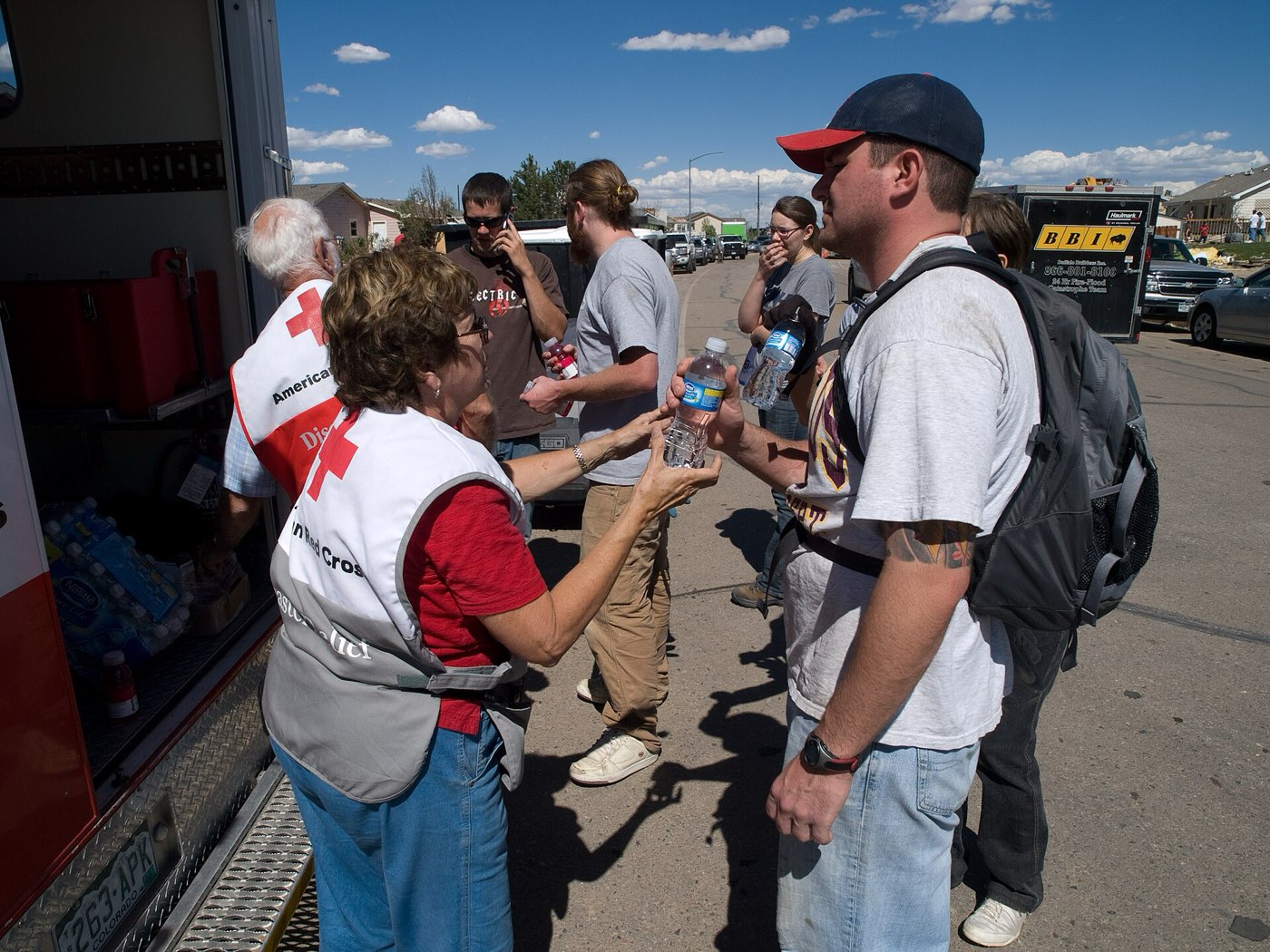
On deployment
- The volunteer beside you folds. Distribution site, tarp shade, hour six. Your teammate goes vague and stops tracking the line — heat illness doesn’t check your job title.
- Sheet metal, bare hands. Debris clearance opens a forearm — deep, dirty, bleeding hard. Gloves on, direct pressure held without peeking, and an honest look before it’s dressed.
- “What have you got?” The coordinator’s radio question deserves better than adjectives. Location, patient count, what you found, what you need — a clear report is a medical skill.
The readiness five
In the order deployments demand them:
- Provider Safety — the discipline of not entering scenes that aren’t yours to enter
- Patient Assessment — the report is only as good as the assessment under it
- Bleeding & Wounds — cleanup work is sharp-object work
- Heat Illness — relief work is long, hot, and bad at breaks — watch your team
- Evacuation — clear notes, named needs, and handing off to the people whose job it is
Then pressure-test it
Interactive scenarios — one decision at a time, tempting mistakes included, debrief at the end:
- Hero Complex — the discipline to stop before you rush in
- Stop Peeking — direct pressure, held honest
- Two Go, One Stays — the written note that makes a report
The certification question, honestly. “Wilderness First Aid” isn’t a regulated credential. No government body defines what a WFA card means — it means whatever the company that printed it says it means. What counts in front of a patient is whether you can do the work. This course teaches the work, free, and issues a record of completion — not a certificate, and we won’t pretend otherwise. Organized response runs on real credentials — agencies train, certify, and coordinate their people, and those standards exist because freelancing helps no one. This course is the personal baseline underneath: it makes you easier to deploy, not qualified to go around anybody. If nobody requires you to hold a card, what you need are the skills, not the laminate.
What this is
Fifteen lessons, a 40-question knowledge check, sixteen practice scenarios, a printable field reference card, and a kit checklist. Free, no account, nothing recorded about you, source on GitHub. It teaches decision-making, not hands-on skill — practice the hands-on parts on a real, padded, complaining friend.
Other long-haul people: jungle & tropical trekkers · desert & canyon-country explorers · polar & arctic expedition members